Chickenpox

Chickenpox
Classification and external resources

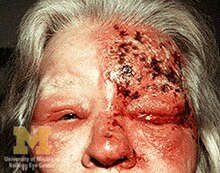
Male with varicella disease
ICD10 B01
ICD9 052
DiseasesDB 29118
MedlinePlus 001592
eMedicine ped/2385 derm/74, emerg/367
MeSH C02.256.466.175

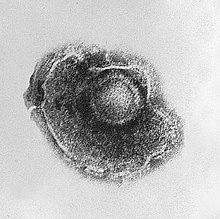
Chickenpox (or chicken pox) is a highly contagious disease caused by primary infection with varicella zoster virus (VZV).[1] It usually starts with vesicular skin rash mainly on the body and head rather than at the periphery and becomes itchy, raw pockmarks, which mostly heal without scarring. On examination, the observer typically finds skin lesions at various stages of healing and also ulcers in the oral cavity & tonsil areas.

Chickenpox is an airborne disease which spreads easily through coughing or sneezing of ill individuals or through direct contact with secretions from the rash. A person with chickenpox is infectious one to two days before the rash appears.[2] They remain contagious until all lesions have crusted over (this takes approximately six days).[3] Immunocompromised patients are contagious during the entire period as new lesions keep appearing. Crusted lesions are not contagious.[4]

Chickenpox has been observed in other primates, including chimpanzees[5] and gorillas.[6]

There are several theories regarding the origin of the term chicken pox. It is often stated to be a modification of chickpeas (based on resemblance of the vesicles to chickpeas),[7][8] or due to the rash resembling chicken pecks.[8] Other theories include the designation chicken for a child (i.e., literally ‘child pox’) or a corruption of itching-pox.[7][9] Samuel Johnson explained the designation as “from its being of no very great danger.”[10]

Contents

Signs and symptoms[edit]

The early (prodromal) symptoms in adolescents and adults are nausea, loss of appetite, aching muscles, and headache. This is followed by the characteristic rash and/or oral sores, malaise, and a low-grade fever that signal the presence of the disease. Oral manifestations of the disease (enanthem) not uncommonly may precede the external rash (exanthem). In children the illness is not usually preceded by prodromal symptoms, and the first sign is the rash or the spots in the oral cavity. The rash begins as small red dots on the face, scalp, torso and upper arms and legs; progressing over 10–12 hours to small bumps, blisters and pustules; followed by umbilication and the formation of scabs.[11][12]

At the blister stage, intense itching is usually present. Blisters may also occur on the palms, soles, and genital area. Commonly, visible evidence of the disease develops in the oral cavity & tonsil areas in the form of small ulcers which can be painful or itchy or both; this enanthem (internal rash) can precede the exanthem (external rash) by 1 to 3 days or can be concurrent. These symptoms of chickenpox appear 10 to 21 days after exposure to a contagious person. Adults may have a more widespread rash and longer fever, and they are more likely to experience complications, such as varicella pneumonia.[11]

Because watery nasal discharge containing live virus usually precedes both exanthem (external rash) and enanthem (oral ulcers) by 1 to 2 days, the infected person actually becomes contagious one to two days prior to recognition of the disease. Contagiousness persists until all vesicular lesions have become dry crusts (scabs), which usually entails four or five days, by which time nasal shedding of live virus also ceases.

Chickenpox is rarely fatal, although it is generally more severe in adult males than in adult females or children. Non-immune pregnant women and those with a suppressed immune system are at highest risk of serious complications. Chickenpox is believed to be the cause of one third of stroke cases in children.[13] The most common late complication of chickenpox is shingles (herpes zoster), caused by reactivation of the varicella zoster virus decades after the initial episode of chickenpox.

Diagnosis[edit]

The diagnosis of varicella is primarily clinical, with typical early “prodromal” symptoms, and then the characteristic rash and oral-cavity sores. Confirmation of the diagnosis can be sought through either examination of the fluid within the vesicles of the rash, or by testing blood for evidence of an acute immunologic response.

Vesicular fluid can be examined with a Tzanck smear, or better by testing for direct fluorescent antibody. The fluid can also be “cultured”, whereby attempts are made to grow the virus from a fluid sample. Blood tests can be used to identify a response to acute infection (IgM) or previous infection and subsequent immunity (IgG).[14]

Prenatal diagnosis of fetal varicella infection can be performed using ultrasound, though a delay of 5 weeks following primary maternal infection is advised. A PCR (DNA) test of the mother’s amniotic fluid can also be performed, though the risk of spontaneous abortion due to the amniocentesis procedure is higher than the risk of the baby developing fetal varicella syndrome.[15]

Epidemiology[edit]

Primary varicella is a disease that is endemic to all countries worldwide. Varicella has a prevalence that is stable from generation to generation.[16]

In temperate countries, chickenpox is primarily a disease of children, with most cases occurring during the winter and spring, most likely due to school contact. It is one of the classic diseases of childhood, with the highest prevalence in the 4–10 year old age group. Like rubella, it is uncommon in preschool children. Varicella is highly communicable, with an infection rate of 90% in close contacts. In temperate countries, most people become infected before adulthood, and 10% of young adults remain susceptible.

In the tropics, chickenpox often occurs in older people and may cause more serious disease.[17] In adults the pock marks are darker and the scars more prominent than in children.[18]

Pathophysiology[edit]
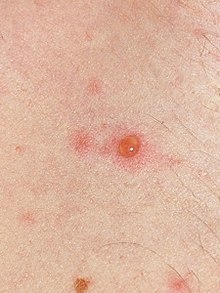
A single blister, typical during the early stages of the rash

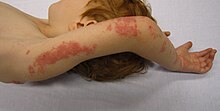
The back of a 30-year-old male, on day 5 of the rash

Exposure to VZV in a healthy child initiates the production of host immunoglobulin G (IgG), immunoglobulin M (IgM), and immunoglobulin A (IgA) antibodies; IgG antibodies persist for life and confer immunity. Cell-mediated immune responses are also important in limiting the scope and the duration of primary varicella infection. After primary infection, VZV is hypothesized to spread from mucosal and epidermal lesions to local sensory nerves. VZV then remains latent in the dorsal ganglion cells of the sensory nerves. Reactivation of VZV results in the clinically distinct syndrome of herpes zoster (i.e., shingles), postherpetic neuralgia,[19] and sometimes Ramsay Hunt syndrome type II.[20]

Infection in pregnancy and neonates[edit]

During pregnancy the dangers to the fetus associated with a primary VZV infection are greater in the first six months. In the third trimester, the mother is more likely to suffer from the adverse effects of the infection.[21] For pregnant women, antibodies produced as a result of immunization or previous infection are transferred via the placenta to the fetus.[22] Women who are immune to chickenpox cannot become infected and do not need to be concerned about it for themselves or their infant during pregnancy.[23]

Varicella infection in pregnant women could lead to viral transmission via the placenta and infection of the fetus. If infection occurs during the first 28 weeks of gestation, this can lead to fetal varicella syndrome (also known as congenital varicella syndrome).[24] Effects on the fetus can range in severity from underdeveloped toes and fingers to severe anal and bladder malformation. Possible problems include:

Infection late in gestation or immediately following birth is referred to as “neonatal varicella“.[27] Maternal infection is associated with premature delivery. The risk of the baby developing the disease is greatest following exposure to infection in the period 7 days prior to delivery and up to 7 days following the birth. The baby may also be exposed to the virus via infectious siblings or other contacts, but this is of less concern if the mother is immune. Newborns who develop symptoms are at a high risk of pneumonia and other serious complications of the disease.[15]

Shingles[edit]

After a chickenpox infection, the virus remains dormant in the body’s nerve tissues. The immune system keeps the virus at bay, but later in life, usually as an adult, it can be reactivated and cause a different form of the viral infection called shingles (scientifically known as herpes zoster).[28] The United States Advisory Committee on Immunization Practices (ACIP) suggests that any adult over the age of 60 years gets the herpes zoster vaccine as a part of their normal medical check ups.

Many adults who have had chickenpox as children are susceptible to shingles as adults, often with the accompanying condition postherpetic neuralgia, a painful condition that makes it difficult to sleep. Even after the shingles rash has gone away, there can be night pain in the area affected by the rash.[29]

Shingles affects one in five adults infected with chickenpox as children, especially those who are immune suppressed, particularly from cancer, HIV, or other conditions. However, stress can bring on shingles as well, although scientists are still researching the connection.[30]

Shingles are most commonly found in adults over the age of 60 who were diagnosed with chickenpox when they were under the age of 1. When the immune system is very low in some cases the virus that was in your system when you were young can come back in the form of shingles [31]

A shingles vaccine is available for adults over 50 who have had childhood chickenpox or who have previously had shingles.[32]

The vaccine for shingles lessens the impact of shingles and its side effects.

Prevention[edit]

Hygiene measures[edit]

The spread of chickenpox can be prevented by isolating affected individuals. Contagion is by exposure to respiratory droplets, or direct contact with lesions, within a period lasting from three days prior to the onset of the rash, to four days after the onset of the rash.[33] The chickenpox virus (VZV) is susceptible to disinfectants, notably chlorine bleach (i.e., sodium hypochlorite). Also, like all enveloped viruses, VZV is sensitive to desiccation, heat and detergents. Therefore these viruses are relatively easy to kill in the environment.[citation needed]

Vaccine[edit]

A varicella vaccine was first developed by Michiaki Takahashi in 1974 derived from the Oka strain. It has been available in the US since 1995 to inoculate against the disease. Some countries require the varicella vaccination or an exemption before entering elementary school. Protection from one dose is not lifelong and a second dose is necessary five years after the initial immunization,[34] which is currently part of the routine immunization schedule in the US.[35] The chickenpox vaccine is not part of the routine childhood vaccination schedule in the UK. In the UK, the vaccine is currently only offered to people who are particularly vulnerable to chickenpox. A vaccinated person is likely to have a milder case of chickenpox if infected.[36]

Treatment[edit]

Varicella treatment mainly consists of easing the symptoms as there is no actual cure of the condition. Some treatments are however available for relieving the symptoms while the immune system suppresses the virus in the body. As a protective measure, patients are usually required to stay at home while they are infectious to avoid spreading the disease to others. Also, sufferers are frequently asked to cut their nails short or to wear gloves to prevent scratching and to minimize the risk of secondary infections.

The condition resolves by itself within a couple of weeks but meanwhile patients must pay attention to their personal hygiene.[37] The rash caused by varicella zoster virus may however last for up to one month, although the infectious stage does not take longer than a week or two.[38]

Although there have been no formal clinical studies evaluating the effectiveness of topical application of calamine lotion, a topical barrier preparation containing zinc oxide and one of the most commonly used interventions, it has an excellent safety profile.[39] It is important to maintain good hygiene and daily cleaning of skin with warm water to avoid secondary bacterial infection.[40] Scratching may also increase the risk of secondary infection.[41]

Acetaminophen (paracetamol) but not aspirin may be used to reduce fever. Aspirin use by someone with chickenpox may cause the serious, sometimes fatal disease of the liver and brain, Reye syndrome. People at risk of developing severe complications who have had significant exposure to the virus may be given intra-muscular varicella zoster immune globulin (VZIG), a preparation containing high titres of antibodies to varicella zoster virus, to ward off the disease.[42][43]

Children[edit]

If oral acyclovir is started within 24 hours of rash onset it decreases symptoms by one day but has no effect on complication rates.[44][45] Use of acyclovir therefore is not currently recommended for immunocompetent individuals (i.e., otherwise healthy persons without known immunodeficiency or on immunosuppressive medication). Children younger than 12 years old and older than one month are not meant to receive antiviral medication if they are not suffering from another medical condition which would put them at risk of developing complications.[46]

Treatment of chickenpox in children is aimed at symptoms while the immune system deals with the virus. With children younger than 12 years cutting nails and keeping them clean is an important part of treatment as they are more likely to scratch their blisters more deeply than adults.[47]

Aspirin is highly contraindicated in children younger than 16 years as it has been related with a potentially fatal condition known as Reye’s syndrome.[48]

Some parents believe that it is better for children to contract chickenpox than to get the vaccine, and deliberately expose their children to the virus, sometimes by taking them to “chickenpox parties.” Some doctors counter that children are safer getting the vaccine, which is a weakened form of the virus, than getting the disease, which can be fatal.[49]

Adults[edit]

Infection in otherwise healthy adults tends to be more severe.[50] Treatment with antiviral drugs (e.g. acyclovir or valacyclovir) is generally advised, as long as it is started within 24–48 hours from rash onset.[46] Remedies to ease the symptoms of chickenpox in adults are basically the same as those used on children. Adults are more often prescribed antiviral medication as it is effective in reducing the severity of the condition and the likelihood of developing complications. Antiviral medicines do not kill the virus, but stop it from multiplying. Adults are also advised to increase water intake to reduce dehydration and to relieve headaches. Painkillers such as paracetamol (acetaminophen) are also recommended as they are effective in relieving itching and other symptoms such as fever or pains. Antihistamines relieve itches and may be used in cases where the itches prevents sleep, because they are also sedative. As with children, antiviral medication is considered more useful for those adults who are more prone to develop complications. These include pregnant women or people who have a weakened immune system.[51]

Sorivudine, a nucleoside analogue has been reported to be effective in the treatment of primary varicella in healthy adults (case reports only), but large-scale clinical trials are still needed to demonstrate its efficacy.[52]

After recovering from chickenpox, it is recommended[by whom?] adults take one injection of VZV immune globulin and one injection of varicella vaccine or herpes zoster vaccine.[citation needed]

Prognosis[edit]

The duration of the visible blistering caused by varicella zoster virus varies in children usually from 4 to 7 days, and the appearance of new blisters begins to subside after the 5th day. Chickenpox infection is milder in young children, and symptomatic treatment, with sodium bicarbonate baths or antihistamine medication may ease itching, it is recommended to keep new infants from birth till 6 months of age away from an infected person for 10 to 21 days as their immune systems are not developed enough to handle the stress it can bring on.[53] Paracetamol (acetaminophen) is widely used to reduce fever. Aspirin, or products containing aspirin, should not be given to children with chickenpox as it can cause Reye’s Syndrome.[54]

In adults, the disease is more severe,[55] though the incidence is much less common. Infection in adults is associated with greater morbidity and mortality due to pneumonia,[56] hepatitis,[57] and encephalitis.[58] In particular, up to 10% of pregnant women with chickenpox develop pneumonia, the severity of which increases with onset later in gestation. In England and Wales, 75% of deaths due to chickenpox are in adults.[15] Inflammation of the brain, or encephalitis, can occur in immunocompromised individuals, although the risk is higher with herpes zoster.[59] Necrotizing fasciitis is also a rare complication.[60]

Varicella can be lethal to adults with impaired immunity. The number of people in this high-risk group has increased, due to the HIV epidemic and the increased use of immunosuppressive therapies.[61] Varicella is a particular problem in hospitals, especially when there are patients with immune systems weakened by drugs (e.g., high-dose steroids) or HIV.[62]

Secondary bacterial infection of skin lesions, manifesting as impetigo, cellulitis, and erysipelas, is the most common complication in healthy children. Disseminated primary varicella infection usually seen in the immunocompromised may have high morbidity. Ninety percent of cases of varicella pneumonia occur in the adult population. Rarer complications of disseminated chickenpox also include myocarditis, hepatitis, and glomerulonephritis.[63]

Hemorrhagic complications are more common in the immunocompromised or immunosuppressed populations, although healthy children and adults have been affected. Five major clinical syndromes have been described: febrile purpura, malignant chickenpox with purpura, postinfectious purpura, purpura fulminans, and anaphylactoid purpura. These syndromes have variable courses, with febrile purpura being the most benign of the syndromes and having an uncomplicated outcome. In contrast, malignant chickenpox with purpura is a grave clinical condition that has a mortality rate of greater than 70%. The etiology of these hemorrhagic chickenpox syndromes is not known.[63]

See also[edit]

References[edit]

  1. ^ Wood MJ (October 2000). “History of Varicella Zoster Virus”. Herpes 7 (3): 60–65. PMID 11867004. 
  2. ^ MedlinePlus Encyclopedia Chickenpox
  3. ^ UHS Tang Center
  4. ^ Centers for Disease Control and Prevention (2012). “Ch. 21: Varicella”. In Atkinson W, Wolfe S, Hamborsky J. Epidemiology and Prevention of Vaccine-Preventable Diseases (12th ed.). Washington DC: Public Health Foundation. pp. 301–323. “The virus has not been isolated from crusted lesions.” 
  5. ^ Cohen JI, Moskal T, Shapiro M, Purcell RH (December 1996). “Varicella in Chimpanzees”. Journal of Medical Virology 50 (4): 289–92. doi:10.1002/(SICI)1096-9071(199612)50:4<289::AID-JMV2>3.0.CO;2-4. PMID 8950684. 
  6. ^ Myers MG, Kramer LW, Stanberry LR (December 1987). “Varicella in a gorilla”. Journal of Medical Virology 23 (4): 317–22. doi:10.1002/jmv.1890230403. PMID 2826674. 
  7. ^ a b Belshe, Robert B. (1984). Textbook of human virology (2nd ed.). Littleton MA: PSG. p. 829. ISBN 0-88416-458-6. 
  8. ^ a b Teri Shors (2011). “Herpesviruses: Varicella Zoster Virus (VZV)”. Understanding Viruses (2nd ed.). Jones & Bartlett. p. 459. ISBN 978-0-7637-8553-6. 
  9. ^ Pattison, John; Zuckerman, Arie J.; Banatvala, J.E. (1994). Principles and practice of clinical virology (3rd ed.). Wiley. p. 37. ISBN 0-471-93106-3. 
  10. ^ Johnson, Samuel (1839). Dictionary of the English language. London: Williamson. p. 195. 
  11. ^ a b Anthony J Papadopoulos. “Chickenpox Clinical Presentation”. In Dirk M Elston. Medscape Reference. Retrieved 4 August 2012. 
  12. ^ “Symptoms of Chickenpox”. Chickenpox. NHS Choices. Retrieved 14 March 2013. 
  13. ^ Askalan R, Laughlin S, Mayank S, et al. (June 2001). “Chickenpox and stroke in childhood: a study of frequency and causation”. Stroke 32 (6): 1257–62. doi:10.1161/01.STR.32.6.1257. PMID 11387484. 
  14. ^ Pincus, Matthew R.; McPherson, Richard A.; Henry, John Bernard (2007). “Ch. 54”. Henry’s clinical diagnosis and management by laboratory methods (21st ed.). Saunders Elsevier. ISBN 1-4160-0287-1. 
  15. ^ a b c Royal College of Obstetricians and Gynaecologists (September 2007). “Chickenpox in Pregnancy” (PDF). Retrieved 2009-07-22. 
  16. ^ Abendroth A, Arvin AM (2001). “Immune evasion as a pathogenic mechanism of varicella zoster virus”. Semin Immunol 13 (1): 27–39. doi:10.1006/smim.2001.0293. PMID 11289797. 
  17. ^ Wharton M (1996). “The epidemiology of varicella-zoster virus infections”. Infect Dis Clin North Am 10 (3): 571–81. doi:10.1016/S0891-5520(05)70313-5. PMID 8856352. 
  18. ^ “Epidemiology of Varicella Zoster Virus Infection, Epidemiology of VZV Infection, Epidemiology of Chicken Pox, Epidemiology of Shingles”. Retrieved 2008-04-22. 
  19. ^ Kanbayashi, Y.; Onishi, K.; Fukazawa, K.; Okamoto, K.; Ueno, H.; Takagi, T.; Hosokawa, T. (2012). “Predictive Factors for Postherpetic Neuralgia Using Ordered Logistic Regression Analysis”. The Clinical Journal oF Pain 28 (8): 712–714. doi:10.1097/AJP.0b013e318243ee01. PMID 22209800. 
  20. ^ Pino Rivero, V.; González Palomino, A.; Pantoja Hernández, C. G.; Mora Santos, M. E.; Trinidad Ramos, G.; Blasco Huelva, A. (2006). “Ramsay-Hunt syndrome associated to unilateral recurrential paralysis”. Anales otorrinolaringologicos ibero-americanos 33 (5): 489–494. PMID 17091862. 
  21. ^ Heuchan, AM; Isaacs, D (2001 Mar 19). “The management of varicella-zoster virus exposure and infection in pregnancy and the newborn period. Australasian Subgroup in Paediatric Infectious Diseases of the Australasian Society for Infectious Diseases.”. The Medical journal of Australia 174 (6): 288–92. PMID 11297117. 
  22. ^ Brannon, Heather (2007-07-22). “Chickenpox in Pregnancy”. Dermatology. About.com. Retrieved 2009-06-20. 
  23. ^ “Chickenpox in Pregnancy”. March of Dimes. April 2007. 
  24. ^ Boussault P, Boralevi F, Labbe L, Sarlangue J, Taïeb A, Leaute-Labreze C (2007). “Chronic varicella-zoster skin infection complicating the congenital varicella syndrome”. Pediatr Dermatol 24 (4): 429–32. doi:10.1111/j.1525-1470.2007.00471.x. PMID 17845179. 
  25. ^ Matsuo T, Koyama M, Matsuo N (July 1990). “Acute retinal necrosis as a novel complication of chickenpox in adults”. Br J Ophthalmol 74 (7): 443–4. doi:10.1136/bjo.74.7.443. PMC 1042160. PMID 2378860. 
  26. ^ Mazzella, M.; Arioni, C.; Bellini, C.; Allegri, A. E.; Savioli, C.; Serra, G. (2003). “Severe hydrocephalus associated with congenital varicella syndrome”. CMAJ : Canadian Medical Association journal = journal de l’Association medicale canadienne 168 (5): 561–563. PMC 149248. PMID 12615748. 
  27. ^ Sauerbrei A, Wutzler P (December 2001). “Neonatal varicella”. J Perinatol 21 (8): 545–9. doi:10.1038/sj.jp.7210599. PMID 11774017. 
  28. ^ “Chickenpox”. NHS Choices. UK Department of Health. 19 April 2012. 
  29. ^ “Shingles & Chickenpox: What’s the Link?”. WebMD. 
  30. ^ “An Overview of Shingles”. WebMD. 
  31. ^ “Shingles”. PubMed Health. 
  32. ^ “Shingles Vaccine”. WebMD. 
  33. ^ Murray, Patrick R.; Rosenthal, Ken S.; Pfaller, Michael A. (2005). Medical Microbiology (5th ed.). Elsevier Mosby. p. 551. ISBN 0-323-03303-2. , edition (Elsevier), p..
  34. ^ Chaves SS, Gargiullo P, Zhang JX, et al. (2007). “Loss of vaccine-induced immunity to varicella over time”. N Engl J Med 356 (11): 1121–9. doi:10.1056/NEJMoa064040. PMID 17360990. 
  35. ^ “Child, Adolescent & “Catch-up” Immunization Schedules”. Immunization Schedules. Centers for Disease Control and Prevention. 
  36. ^ “Chickenpox (varicella) vaccination”. NHS Choices. UK Department of Health. 19 April 2012. 
  37. ^ “Chickenpox (varicella)”. Retrieved 2010-11-06. 
  38. ^ “Varicella Zoster Virus”. Retrieved 2010-11-06. 
  39. ^ Tebruegge M, Kuruvilla M, Margarson I (2006). “Does the use of calamine or antihistamine provide symptomatic relief from pruritus in children with varicella zoster infection?” (Abstract). Arch. Dis. Child. 91 (12): 1035–6. doi:10.1136/adc.2006.105114. PMC 2082986. PMID 17119083. 
  40. ^ Domino, Frank J. (2007). The 5-Minute Clinical Consult. Lippincott Williams & Wilkins. p. 248. ISBN 978-0-7817-6334-9. 
  41. ^ Brannon, Heather (May 21, 2008). Chicken Pox Treatments. About.com.
  42. ^ Parmet S, Lynm C, Glass RM (February 2004). “JAMA patient page. Chickenpox”. JAMA 291 (7): 906. doi:10.1001/jama.291.7.906. PMID 14970070. 
  43. ^ Naus M et al. (15 October 2006). “Varizig™ as the Varicella Zoster Immune Globulin for the Prevention of Varicella In At-Risk Patients”. Canada Communicable Disease Report 32 (ACS-8). 
  44. ^ Kay, AB (2001). “Allergy and allergic diseases. First of two parts”. The New England journal of medicine 344 (1): 30–7. doi:10.1056/NEJM200101043440106. PMID 11136958. 
  45. ^ Kay, AB (2001). “Allergy and allergic diseases. Second of two parts”. The New England journal of medicine 344 (2): 109–13. doi:10.1056/NEJM200101113440206. PMID 11150362. 
  46. ^ a b “Antiviral medications for chickenpox”. Retrieved 2011-03-27. 
  47. ^ “Chickenpox in Children Under 12”. Retrieved 2010-11-06. 
  48. ^ “Reye’s Syndrome-Topic Overview”. Retrieved 2011-03-27. 
  49. ^ “Chicken Pox parties do more harm than good, says doctor”. KSLA News 12 Shreveport, Louisiana News Weather & Sports. 
  50. ^ Tunbridge AJ, Breuer J, Jeffery KJ (August 2008). “Chickenpox in adults – clinical management”. The Journal of Infection 57 (2): 95–102. doi:10.1016/j.jinf.2008.03.004. PMID 18555533. 
  51. ^ “What is chickenpox?”. Retrieved 2010-11-06. 
  52. ^ Chickenpox~treatment at eMedicine
  53. ^ Somekh E, Dalal I, Shohat T, Ginsberg GM, Romano O (2002). “The burden of uncomplicated cases of chickenpox in Israel”. J. Infect. 45 (1): 54–7. doi:10.1053/jinf.2002.0977. PMID 12217733. 
  54. ^ US Centers for Disease Control and Prevention. “Varicella Treatment Questions & Answers”. CDC Guidelines. CDC. Retrieved 2007-08-23. 
  55. ^ Jill M. Baren MD, Philip L. Henneman MD, Roger J. Lewis MD, PhD (August 1996). “Primary Varicella in Adults: Pneumonia, Pregnancy, and Hospital Admissions”. Annals of Emergency Medicine 28 (2): 165–169. doi:10.1016/S0196-0644(96)70057-4. PMID 8759580. 
  56. ^ Mohsen AH, McKendrick M (May 2003). “Varicella pneumonia in adults”. Eur. Respir. J. 21 (5): 886–91. doi:10.1183/09031936.03.00103202. PMID 12765439. 
  57. ^ Anderson, D.R.; Schwartz, J.; Hunter, N.J.; Cottrill, C.; Bissaccia, E.; Klainer, A.S. (1994). “Varicella Hepatitis: A Fatal Case in a Previously Healthy, Immunocompetent Adult”. Archives of Internal Medicine (JAMA) 154 (18): 2101–2106. doi:10.1001/archinte.1994.00420180111013. 
  58. ^ Abro, Ali Hassan; Ustadi, A. M., Das, K., Abdou, A. M., Hussaini, H. S., & Chandra, F. S. (December 2009). “Chickenpox: presentation and complications in adults”. Journal of Pakistan Medical Association 59 (12): 828–831. PMID 20201174. Retrieved 17 April 2013. 
  59. ^ “Definition of Chickenpox”. MedicineNet.com. Retrieved 2006-08-18. 
  60. ^ “Is Necrotizing Fasciitis a complication of Chickenpox of Cutaneous Vasculitis?”. atmedstu.com. Retrieved 2008-01-18. 
  61. ^ Strangfeld A, Listing J, Herzer P, et al. (February 2009). “Risk of herpes zoster in patients with rheumatoid arthritis treated with anti-TNF-alpha agents”. JAMA 301 (7): 737–44. doi:10.1001/jama.2009.146. PMID 19224750. 
  62. ^ Weller TH (1997). “Varicella-herpes zoster virus”. In Evans AS, Kaslow RA. Viral Infections of Humans: Epidemiology and Control. Plenum Press. pp. 865–92. ISBN 978-0-306-44855-3. 
  63. ^ a b Chicken Pox Complications

External links[edit]


This article uses material from the Wikipedia article Chickenpox, which is released under the Creative Commons Attribution-Share-Alike License 3.0.

Posted in Causes of Shingles | Leave a comment

Genital Herpes Home Treatment – ? Proven Ways to Deal With Genital Herpes


Thanks for visiting our shingles herpes zoster website. You will find the latest information, discussions about the pros and cons of each aspect, and also, a large community of readers who regularly share their ideas and opinions on the latest developments. It is as important now as it ever was to examine the issue carefully. After all, without the facts, how can we know we are making the right choice?

We recently came across the article below and we have posted it on our site because it addresses some of the unanswered questions and raises some new ones at the same time. If you like what you see here, be sure to come back and, let your friends know.


Genital Herpes Home Treatment – ? Proven Ways to Deal With Genital Herpes

Submitted by: Adriana Sands

Genital herpes is a sexually transmitted disease, otherwise known as the Herpes Simplex Virus 2, or HSV2. It is estimated that around 1 in 6 Americans currently carry the genital herpes virus.

If you have been recently diagnosed with genital herpes, you probably know that there is still no known cure for this virus. As depressing as that is, what many people do not know is that herpes is a very controllable and treatable diet. Home treatments can really help keep outbreaks at bay, and can be used as an alternative to prescription drugs, or just a way to boost the effectiveness of prescribed treatments.

The virus lays dormant in the body, even when not causing symptoms, and waits for a trigger to cause an outbreak. An outbreak can be caused by stress, sickness, poor diet, vast changes in temperature (such as a heatwave, cold snap or going on holidays to a different climate) and many other factors that vary from person to person.

This does not mean though that people with genital herpes should just suffer the rest of their lives from the symptoms and outbreaks of this disease. Because though there is no cure for genital herpes, its symptoms can be easily managed.

The key in dealing with genital herpes effectively is to avoid outbreaks. There are people with genital herpes who have not had outbreaks in years. They have been able to this with the help of a healthy lifestyle and a positive attitude. There are several home treatments that can be done to help avoid outbreaks and deal with it if they occur. Below are a couple of genital herpes home treatment tips that can help anyone suffering from genital herpes.

1. Good diet. The best genital herpes home treatment is food. Diet can play an important role in the control of outbreaks. Individuals with herpes should eat a lot of cranberries, broccoli, cabbage and brussels because these foods are known to effectively control genital herpes outbreaks.

2. Natural topical treatments. If outbreaks do occur you can use all-natural topical treatments such as honey, aloe vera, red marine algae, tea tree oil and eucalyptus. All of these herbal remedies have a soothing and anti-inflammatory effect that can diminish the pain and itching associated with outbreaks. You can purchase these ingredients individually, or you can get a homeopathic blend of several concentrated natural treatments from a naturopath or homeopathic practioner.

3. High lysine, low arganine. Lysine is a natural fighter of genital herpes and one of the best genital herpes home treatments. You can get lysine in pill form from health food stores, and one a day will really keep outbreaks away. It is also dynamite for avoiding cold sores. Arganine is the nasty amino acid that helps outbreaks flourish, and is found in sugary and fatty foods. Cut high arginine foods out of your diet to stop outbreaks from taking hold.

By just following these three genital herpes home treatment tips you can go a long way towards curbing and reducing the frequency of herpes outbreaks. As time goes on and the nutrient levels in your body change, your outbreaks will occur less frequently and be less severe and long lasting when they do.

About the Author: Are you looking for more genital herpes home treatments? Are you looking for a way to get rid of genital herpes? You can control your symptoms and live a normal life with the right treatment.Stop being a prisoner to genital herpes today!

Source: www.isnare.com

Permanent Link: http://www.isnare.com/?aid=354968&ca=Medicines+and+Remedies


Obviously, there is a lot more to know about shingles herpes zoster. This brief article is just a start, and the next step is to do some more research. In any case, the tips in the article set the stage for a more detailed treatment of the subject.


Posted in Uncategorized | Leave a comment

Herpes Zoster

Herpes zoster
Classification and external resources

Herpes zoster blisters on the neck and shoulder

ICD10 B02
ICD9 053
DiseasesDB 29119
MedlinePlus 000858
eMedicine med/1007 derm/180 emerg/823 oph/257 ped/996

Herpes zoster (or simply zoster), commonly known as shingles and also known as zona, is a viral disease characterized by a painful skin rash with blisters in a limited area on one side of the body (left or right), often in a stripe. The initial infection with varicella zoster virus (VZV) causes the acute, short-lived illness chickenpox which generally occurs in children and young adults. Once an episode of chickenpox has resolved, the virus is not eliminated from the body but can go on to cause shingles — an illness with very different symptoms — often many years after the initial infection. Herpes zoster is not the same disease as herpes simplex, despite the name similarity; both the varicella zoster virus and herpes simplex virus belong to the same viral subfamily Alphaherpesvirinae.

Varicella zoster virus can become latent in the nerve cell bodies and less frequently in non-neuronal satellite cells of dorsal root, cranial nerve or autonomic ganglion,[1] without causing any symptoms.[2] Years or decades after a chickenpox infection, the virus may break out of nerve cell bodies and travel down nerve axons to cause viral infection of the skin in the region of the nerve. The virus may spread from one or more ganglia along nerves of an affected segment and infect the corresponding dermatome (an area of skin supplied by one spinal nerve) causing a painful rash.[3][4] Although the rash usually heals within two to four weeks, some sufferers experience residual nerve pain for months or years, a condition called postherpetic neuralgia. Exactly how the virus remains latent in the body, and subsequently re-activates is not understood.[1]

Throughout the world the incidence rate of herpes zoster every year ranges from 1.2 to 3.4 cases per 1,000 healthy individuals, increasing to 3.9–11.8 per year per 1,000 individuals among those older than 65 years.[5][6][7] Over a lifetime, a large fraction of people develop herpes zoster, though usually only once — in a 1960s U.S. study, 50% of individuals living to age 85 had at least one attack, while 1% had at least two attacks.[8] Antiviral drug treatment can reduce the severity and duration of herpes zoster if a seven- to ten-day course of these drugs is started within 72 hours of the appearance of the characteristic rash.[5][9]

Contents

Signs and symptoms [edit]

A case of shingles that demonstrates the typical dermatomal distribution, in this case C8/T1

The earliest symptoms of herpes zoster, which include headache, fever, and malaise, are nonspecific, and may result in an incorrect diagnosis.[5][10] These symptoms are commonly followed by sensations of burning pain, itching, hyperesthesia (oversensitivity), or paresthesia (“pins and needles”: tingling, pricking, or numbness).[11] The pain may be mild to extreme in the affected dermatome, with sensations that are often described as stinging, tingling, aching, numbing or throbbing, and can be interspersed with quick stabs of agonizing pain.[12]

Herpes zoster in children is often painless, but older people are more likely to get zoster as they age, and the disease tends to be more severe.[13]

In most cases after one to two days, but sometimes as long as three weeks, the initial phase is followed by the appearance of the characteristic skin rash. The pain and rash most commonly occurs on the torso, but can appear on the face, eyes or other parts of the body. At first the rash appears similar to the first appearance of hives; however, unlike hives, herpes zoster causes skin changes limited to a dermatome, normally resulting in a stripe or belt-like pattern that is limited to one side of the body and does not cross the midline.[11] Zoster sine herpete (“zoster without herpes”) describes a patient who has all of the symptoms of herpes zoster except this characteristic rash.[14]

Later the rash becomes vesicular, forming small blisters filled with a serous exudate, as the fever and general malaise continue. The painful vesicles eventually become cloudy or darkened as they fill with blood, crust over within seven to ten days; usually the crusts fall off and the skin heals, but sometimes, after severe blistering, scarring and discolored skin remain.[11]

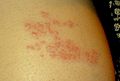
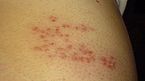
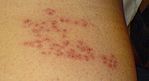
Development of the shingles rash
Day 1 Day 2 Day 5 Day 6
ShinglesDay1.JPG ShinglesDay2 ed.JPG ShinglesDay5 ed.JPG ShinglesDay6 ed.JPG

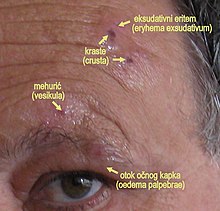
Herpes zoster may have additional symptoms, depending on the dermatome involved. Herpes zoster ophthalmicus involves the orbit of the eye and occurs in approximately 10% to 25% of cases. It is caused by the virus reactivating in the ophthalmic division of the trigeminal nerve. In a few patients, symptoms may include conjunctivitis, keratitis, uveitis, and optic nerve palsies that can sometimes cause chronic ocular inflammation, loss of vision, and debilitating pain.[15] Herpes zoster oticus, also known as Ramsay Hunt syndrome type II, involves the ear. It is thought to result from the virus spreading from the facial nerve to the vestibulocochlear nerve. Symptoms include hearing loss and vertigo (rotational dizziness).[1]

Pathophysiology [edit]

Progression of herpes zoster. A cluster of small bumps (1) turns into blisters (2). The blisters fill with lymph, break open (3), crust over (4), and finally disappear. Postherpetic neuralgia can sometimes occur due to nerve damage (5),

The causative agent for herpes zoster is varicella zoster virus (VZV), a double-stranded DNA virus related to the Herpes simplex virus group. Most people are infected with this virus as children, and suffer from an episode of chickenpox. The immune system eventually eliminates the virus from most locations, but it remains dormant (or latent) in the ganglia adjacent to the spinal cord (called the dorsal root ganglion) or the ganglion semilunare (ganglion Gasseri) in the base of the skull.[16] Repeated attacks of herpes zoster are rare,[11] and it is extremely rare for patients to suffer more than three recurrences.[16]

Herpes zoster occurs only in people who have been previously infected with VZV; although it can occur at any age, approximately half of the cases in the USA occur in those aged 50 years or older.[17] The disease results from the virus reactivating in a single sensory ganglion.[4] In contrast to Herpes simplex virus, the latency of VZV is poorly understood. The virus has not been recovered from human nerve cells by cell culture and the location and structure of the viral DNA is not known. Virus-specific proteins continue to be made by the infected cells during the latent period, so true latency, as opposed to a chronic low-level infection, has not been proven.[2][18] Although VZV has been detected in autopsies of nervous tissue,[19] there are no methods to find dormant virus in the ganglia in living people.

Unless the immune system is compromised, it suppresses reactivation of the virus and prevents herpes zoster. Why this suppression sometimes fails is poorly understood,[6] but herpes zoster is more likely to occur in people whose immune system is impaired due to aging, immunosuppressive therapy, psychological stress, or other factors.[20] Upon reactivation, the virus replicates in the nerve cells, and virions are shed from the cells and carried down the axons to the area of skin served by that ganglion. In the skin, the virus causes local inflammation and blisters. The short- and long-term pain caused by herpes zoster comes from the widespread growth of the virus in the infected nerves, which causes inflammation.[21]

As with chickenpox and/or other forms of herpes, direct contact with an active rash can spread VZV to a person who has no immunity to the virus. This newly infected individual may then develop chickenpox, but will not immediately develop shingles. Until the rash has developed crusts, a person is extremely contagious. A person is not infectious before blisters appear, or during postherpetic neuralgia (pain after the rash is gone).[11]

Diagnosis [edit]

Herpes zoster on the chest

If the rash has appeared, identifying this disease (making a differential diagnosis) requires only a visual examination, since very few diseases produce a rash in a dermatomal pattern (see map). However, herpes simplex virus (HSV) can occasionally produce a rash in such a pattern. The Tsanck smear is helpful for diagnosing acute infection with a herpes virus, but does not distinguish between HSV and VZV.[22]

When the rash is absent (early or late in the disease, or in the case of zoster sine herpete), herpes zoster can be difficult to diagnose.[23] Apart from the rash, most symptoms can occur also in other conditions.

Laboratory tests are available to diagnose herpes zoster. The most popular test detects VZV-specific IgM antibody in blood; this appears only during chickenpox or herpes zoster and not while the virus is dormant.[24] In larger laboratories, lymph collected from a blister is tested by polymerase chain reaction for VZV DNA, or examined with an electron microscope for virus particles.[25]

In a recent study, samples of lesions on the skin, eyes, and lung from 182 patients with presumed herpes simplex or herpes zoster were tested with real-time PCR or with viral culture. In this comparison, viral culture detected VZV with only a 14.3% sensitivity, although the test was highly specific (specificity=100%). By comparison, real-time PCR resulted in 100% sensitivity and specificity. Overall testing for herpes simplex and herpes zoster using PCR showed a 60.4% improvement over viral culture.[26]

Prevention [edit]

A live vaccine for VZV exists, marketed as Zostavax.[27] A systematic review by the Cochrane Library concluded that Zostavax can reduce the absolute risk of shingles by 1.75%, a 50% relative risk reduction.[28] This translates to 1 episode of shingles prevented for every 70 patients vaccinated. A 2007 study found that the zoster vaccine is likely to be cost-effective in the U.S., projecting an annual savings of $82 to $103 million in healthcare costs with cost-effectiveness ratios ranging from $16,229 to $27,609 per quality-adjusted life year gained.[29] In October 2007 the vaccine was officially recommended in the U.S. for healthy adults aged 60 and over.[27][30] The Centers for Disease Control and Prevention recommends shingle vaccine for use in people 60 years old and older to prevent shingles, but it is not recommended to treat active shingles or post-herpetic neuralgia (pain after the rash is gone) once it develops.[31] Adults also receive an immune boost from contact with children infected with varicella (chicken pox), a boosting method that prevents about a quarter of herpes zoster cases among unvaccinated adults, but that is becoming less common in the U.S. now that children are routinely vaccinated against varicella.[9][32]

In the United Kingdom and other parts of Europe, population-based varicella immunization is not practiced. The rationale is that until the entire population could be immunized, adults who have previously contracted VZV would instead derive benefit from occasional exposure to VZV (from children), which serves as a booster to their immunity to the virus, and may reduce the risk of shingles later on in life.[33] The UK Health Protection Agency states that, while the vaccine is licensed in the UK, there are no plans to introduce it into the routine childhood immunization scheme, although it may be offered to healthcare workers who have no immunity to VZV.[34]

Treatment [edit]

The aims of treatment are to limit the severity and duration of pain, shorten the duration of a shingles episode, and reduce complications. Symptomatic treatment is often needed for the complication of postherpetic neuralgia.[35] However, a study on untreated herpes zoster shows that, once the rash has cleared, postherpetic neuralgia is very rare in people under 50 and wears off in time; in older people the pain wore off more slowly, but even in people over 70, 85% were pain free one year after their shingles outbreak.[36]

Analgesics [edit]

People with mild to moderate pain can be treated with over-the-counter analgesics. Topical lotions containing calamine can be used on the rash or blisters and may be soothing. Occasionally, severe pain may require an opioid medication, such as morphine. Once the lesions have crusted over, capsaicin cream (Zostrix) can be used. Topical lidocaine and nerve blocks may also reduce pain.[37] Administering gabapentin along with antivirals may offer relief of postherpetic neuralgia.[35]

Antivirals [edit]

Antiviral drugs inhibit VZV replication and reduce the severity and duration of herpes zoster with minimal side effects, but do not reliably prevent postherpetic neuralgia. Of these drugs, acyclovir has been the standard treatment, but the new drugs valaciclovir and famciclovir demonstrate similar or superior efficacy and good safety and tolerability.[35] The drugs are used both as prophylaxis (for example in AIDS patients) and as therapy during the acute phase. Antiviral treatment is recommended for all immunocompetent individuals with herpes zoster over 50 years old, preferably given within 72 hours of the appearance of the rash.[38] Complications in immunocompromised individuals with herpes zoster may be reduced with intravenous acyclovir. In people who are at a high risk for repeated attacks of shingles, five daily oral doses of acyclovir are usually effective.[1]

Steroids [edit]

Orally administered corticosteroids are frequently used in treatment of the infection, despite clinical trials of this treatment being unconvincing. Nevertheless, one trial studying immunocompetent patients older than 50 years of age with localized herpes zoster, suggested that administration of prednisone with aciclovir improved healing time and quality of life.[39] Upon one-month evaluation, aciclovir with prednisone increased the likelihood of crusting and healing of lesions by about twofold, when compared to placebo. This trial also evaluated the effects of this drug combination on quality of life at one month, showing that patients had less pain, and were more likely to stop the use of analgesic agents, return to usual activities and have uninterrupted sleep. However, when comparing cessation of herpes zoster-associated pain or post herpetic neuralgia, there was no difference between aciclovir plus prednisone and simply aciclovir alone. Because of the risks of corticosteroid treatment, it is recommended that this combination of drugs only be used in people more than 50 years of age, due to their greater risk of postherpetic neuralgia.[39]

Herpes zoster ophthalmicus [edit]

Herpes zoster ophthalmicus.

Trigeminal herpes zoster with uveitis and keratitis.

Treatment for herpes zoster ophthalmicus is similar to standard treatment for herpes zoster at other sites. A recent trial comparing aciclovir with its prodrug, valaciclovir, demonstrated similar efficacies in treating this form of the disease.[40] The significant advantage of valciclovir over aciclovir is its dosing of only 3 times/day (compared with aciclovir’s 5 times/day dosing), which could make it more convenient for patients and improve adherence with therapy.[41]

Prognosis [edit]

The rash and pain usually subside within three to five weeks, but about one in five patients develop a painful condition called postherpetic neuralgia, which is often difficult to manage. In some patients, herpes zoster can reactivate presenting as zoster sine herpete: pain radiating along the path of a single spinal nerve (a dermatomal distribution), but without an accompanying rash. This condition may involve complications that affect several levels of the nervous system and cause many cranial neuropathies, polyneuritis, myelitis, or aseptic meningitis. Other serious effects that may occur in some cases include partial facial paralysis (usually temporary), ear damage, or encephalitis.[1] During pregnancy, first infections with VZV, causing chickenpox, may lead to infection of the fetus and complications in the newborn, but chronic infection or reactivation in shingles are not associated with fetal infection.[42][43]

There is a slightly increased risk of developing cancer after a herpes zoster infection. However, the mechanism is unclear and mortality from cancer did not appear to increase as a direct result of the presence of the virus.[44] Instead, the increased risk may result from the immune suppression that allows the reactivation of the virus.[45]

Although herpes zoster typically resolves within 2 weeks, certain complications may arise:

  • Secondary bacterial infection
  • Motor involvement — including weakness especially in “motor herpes zoster”
  • Eye involvement — trigeminal nerve involvement (as seen in herpes ophthalmicus) should be treated early and aggressively as it may lead to blindness. Involvement of the tip of the nose in the zoster rash is a strong predictor of herpes ophthalmicus.[46]
  • Postherpetic neuralgia — a condition of chronic pain following herpes zoster

Epidemiology [edit]

Electron micrograph of Varicella zoster virus. Approx. 150,000-fold magnification.

Varicella zoster virus (VZV) has a high level of infectivity and has a worldwide prevalence.[47] Herpes zoster is a re-activation of latent VZV infection: this means that zoster can only occur in someone who has previously had chickenpox (varicella).

Herpes zoster has no relationship to season and does not occur in epidemics. There is, however, a strong relationship with increasing age.[13][20] The incidence rate of herpes zoster ranges from 1.2 to 3.4 per 1,000 person-years among healthy individuals, increasing to 3.9–11.8 per 1,000 person?years among those older than 65 years,[5][13] and incidence rates worldwide are similar.[5][7] This relationship with age has been demonstrated in many countries,[5][7][48][49][50][51] and is attributed to the fact that cellular immunity declines as people grow older.

Another important risk factor is immunocompromise: HIV is an important example of immune compromise[52][53]). Other risk factors include psychological stress.[12][54][55] According to a study in North Carolina, “black subjects were significantly less likely to develop zoster than were white subjects.”[56][57] It is unclear whether the risk is increased in females. Other potential risk factors include mechanical trauma and exposure to immunotoxins.[20][55]

There is no strong evidence for a genetic link or a link to family history. A 2008 study showed that people with close relatives who have had shingles are twice as likely to develop it themselves,[58] but a 2010 study found no such link.[55]

Adults with latent VZV infection who are exposed intermittently to children with chickenpox receive an immune boost.[13][55] This periodic boost to the immune system helps to prevent shingles in older adults. When routine chickenpox vaccination was introduced in the United States, the concern was that because older adults would no longer receive this natural, periodic boost, this would result in an increase in the incidence of shingles in the United States.

Multiple studies and surveillance data, at least when viewed superficially, demonstrate no consistent trends in incidence in the U.S. since the chickenpox vaccination program began in 1995.[59] However, upon closer inspection, the two studies that showed no increase in shingles incidence were conducted among populations where varicella vaccination was not as yet widespread in the community.[60][61] A recent study by Patel et al. concluded that since the introduction of the chickenpox vaccine, hospitalization costs for complications of shingles have increased by more than $700 million annually for those over 60 years.[62] Another study by Yih et al. reported that as varicella vaccine coverage in children increased, the incidence of varicella decreased and the occurrence of shingles among adults increased 90%.[63] The results of a further study by Yawn et al. showed a 28% increase in shingles incidence from 1996 to 2001.[64] It is likely that incidence rate will change in the future, due to the aging of the population, changes in therapy for malignant and autoimmune diseases, and changes in chickenpox vaccination rates; a wide adoption of zoster vaccination could dramatically reduce the incidence rate.[5]

In one study, it was estimated that 26% of patients who contract herpes zoster eventually present with complications. Postherpetic neuralgia arises in approximately 20% of patients.[65] A study of 1994 California data found hospitalization rates of 2.1 per 100,000 person-years, rising to 9.3 per 100,000 person-years for ages 60 and up.[66] An earlier Connecticut study found a higher hospitalization rate; the difference may be due to the prevalence of HIV in the earlier study, or to the introduction of antivirals in California before 1994.[67]

History [edit]

Herpes zoster has a long recorded history, although historical accounts fail to distinguish the blistering caused by VZV and those caused by smallpox,[17] ergotism, and erysipelas. It was only in the late 18th century that William Heberden established a way to differentiate between herpes zoster and smallpox,[68] and only in the late 19th century that herpes zoster was differentiated from erysipelas. In 1831, Richard Bright hypothesized that the disease arose from the dorsal root ganglion, and this was confirmed in an 1861 paper by Felix von Bärensprung.[69]

The first indications that chickenpox and herpes zoster were caused by the same virus were noticed at the beginning of the 20th century. Physicians began to report that cases of herpes zoster were often followed by chickenpox in the younger people who lived with the shingles patients. The idea of an association between the two diseases gained strength when it was shown that lymph from a sufferer of herpes zoster could induce chickenpox in young volunteers. This was finally proved by the first isolation of the virus in cell cultures, by the Nobel laureate Thomas Huckle Weller, in 1953.[70]

Until the 1940s, the disease was considered benign, and serious complications were thought to be very rare.[71] However, by 1942, it was recognized that herpes zoster was a more serious disease in adults than in children, and that it increased in frequency with advancing age. Further studies during the 1950s on immunosuppressed individuals showed that the disease was not as benign as once thought, and the search for various therapeutic and preventive measures began.[72] By the mid-1960s, several studies identified the gradual reduction in cellular immunity in old age, observing that in a cohort of 1,000 people who lived to the age of 85, approximately 500 (i.e., 50%) would have at least one attack of herpes zoster, and 10 (i.e., 1%) would have at least two attacks.[8]

In historical shingles studies, shingles incidence generally increased with age. However, in his 1965 paper, Dr. Hope-Simpson was first to suggest, “The peculiar age distribution of zoster may in part reflect the frequency with which the different age groups encounter cases of varicella and because of the ensuing boost to their antibody protection have their attacks of zoster postponed.”[13] Lending support to this hypothesis that contact with children with chickenpox boosts adult cell-mediated immunity to help postpone or suppress shingles, is the study by Thomas et al., which reported that adults in households with children had lower rates of shingles than households without children.[73] Also, the study by Terada et al. indicated that pediatricians reflected incidence rates from 1/2 to 1/8 that of the general population their age.[74]

Etymology [edit]

The family name of all the herpesviridae is derived from the Greek word herpein (“to creep”),[75] referring to the latent, recurring infections typical of this group of viruses. Zoster comes from Greek z?st?r, meaning “belt” or “girdle”, after the characteristic belt-like dermatomal rash.[76] The common name for the disease, shingles, derives from the Latin cingulus, a variant of Latin cingulum meaning “girdle”.[77]

See also [edit]

References [edit]

  1. ^ a b c d e Johnson, RW & Dworkin, RH (2003). “Clinical review: Treatment of herpes zoster and postherpetic neuralgia”. BMJ 326 (7392): 748–750. doi:10.1136/bmj.326.7392.748. PMC 1125653. PMID 12676845. 
  2. ^ a b Kennedy PG (2002). “Varicella-zoster virus latency in human ganglia”. Rev. Med. Virol. 12 (5): 327–334. doi:10.1002/rmv.362. PMID 12211045. 
  3. ^ Peterslund NA (1991). “Herpesvirus infection: an overview of the clinical manifestations”. Scand J Infect Dis Suppl 80: 15–20. PMID 1666443. 
  4. ^ a b Gilden DH, Cohrs RJ, Mahalingam R (2003). “Clinical and molecular pathogenesis of varicella virus infection”. Viral Immunol 16 (3): 243–258. doi:10.1089/088282403322396073. PMID 14583142. 
  5. ^ a b c d e f g Dworkin RH, Johnson RW, Breuer J et al. (2007). “Recommendations for the management of herpes zoster”. Clin. Infect. Dis. 44 Suppl 1: S1–26. doi:10.1086/510206. PMID 17143845. 
  6. ^ a b Donahue JG, Choo PW, Manson JE, Platt R (1995). “The incidence of herpes zoster”. Arch. Intern. Med 155 (15): 1605–1609. doi:10.1001/archinte.155.15.1605. PMID 7618983. 
  7. ^ a b c Araújo LQ, Macintyre CR, Vujacich C (2007). “Epidemiology and burden of herpes zoster and post-herpetic neuralgia in Australia, Asia and South America” (PDF). Herpes 14 (Suppl 2): 40A–44A. PMID 17939895. 
  8. ^ a b Hope-Simpson RE (1965). “The nature of herpes zoster; a long-term study and a new hypothesis”. Proc R Soc Med 58 (1): 9–20. PMC 1898279. PMID 14267505. 
  9. ^ a b Cunningham AL, Breuer J, Dwyer DE, Gronow DW, Helme RD, Litt JC, Levin MJ, Macintyre CR (2008). “The prevention and management of herpes zoster”. Med. J. Aust. 188 (3): 171–176. PMID 18241179. 
  10. ^ Zamula E (May–June 2001). “Shingles: an unwelcome encore”. FDA Consumer 35 (3): 21–25. PMID 11458545. Retrieved 2010-01-05.  Revised June 2005.
  11. ^ a b c d e Stankus SJ, Dlugopolski M, Packer D (2000). “Management of herpes zoster (shingles) and postherpetic neuralgia”. Am Fam Physician 61 (8): 2437–2444, 2447–2448. PMID 10794584. 
  12. ^ a b Katz J, Cooper EM, Walther RR, Sweeney EW, Dworkin RH (2004). “Acute pain in herpes zoster and its impact on health-related quality of life”. Clin. Infect. Dis 39 (3): 342–348. doi:10.1086/421942. PMID 15307000. 
  13. ^ a b c d e Hope-Simpson RE (1965). “The nature of herpes zoster: a long-term study and a new hypothesis”. Proc R Soc Med 58 (1): 9–20. PMC 1898279. PMID 14267505. 
  14. ^ Furuta Y, Ohtani F, Mesuda Y, Fukuda S, Inuyama Y (2000). “Early diagnosis of zoster sine herpete and antiviral therapy for the treatment of facial palsy”. Neurology 55 (5): 708–710. doi:10.1212/WNL.55.5.708. PMID 10980741. 
  15. ^ Shaikh S, Ta CN (2002). “Evaluation and management of herpes zoster ophthalmicus”. Am Fam Physician 66 (9): 1723–1730. PMID 12449270. 
  16. ^ a b Steiner I, Kennedy PG, Pachner AR (2007). “The neurotropic herpes viruses: herpes simplex and varicella-zoster”. Lancet Neurol 6 (11): 1015–1028. doi:10.1016/S1474-4422(07)70267-3. PMID 17945155. 
  17. ^ a b Weinberg JM (2007). “Herpes zoster: epidemiology, natural history, and common complications”. J Am Acad Dermatol 57 (6 Suppl): S130–S135. doi:10.1016/j.jaad.2007.08.046. PMID 18021864. 
  18. ^ Kennedy PG (2002). “Key issues in varicella-zoster virus latency”. J. Neurovirol. 8 Suppl 2 (2): 80–84. doi:10.1080/13550280290101058. PMID 12491156. 
  19. ^ Mitchell BM, Bloom DC, Cohrs RJ, Gilden DH, Kennedy PG (2003). “Herpes simplex virus-1 and varicella-zoster virus latency in ganglia” (PDF). J. Neurovirol 9 (2): 194–204. doi:10.1080/713831492. PMID 12707850. 
  20. ^ a b c Thomas SL, Hall AJ (2004). “What does epidemiology tell us about risk factors for herpes zoster?”. Lancet Infect Dis 4 (1): 26–33. doi:10.1016/S1473-3099(03)00857-0. PMID 14720565. 
  21. ^ Schmader K (2007). “Herpes zoster and postherpetic neuralgia in older adults”. Clin. Geriatr. Med. 23 (3): 615–632, vii–viii. doi:10.1016/j.cger.2007.03.003. PMID 17631237. 
  22. ^ Oranje AP, Folkers E (1988). “The Tzanck smear: old, but still of inestimable value”. Pediatr Dermatol 5 (2): 127–129. doi:10.1111/j.1525-1470.1988.tb01154.x. PMID 2842739. 
  23. ^ Chan J, Bergstrom RT, Lanza DC, Oas JG (2004). “Lateral sinus thrombosis associated with zoster sine herpete”. Am J Otolaryngol 25 (5): 357–360. doi:10.1016/j.amjoto.2004.03.007. PMID 15334402. 
  24. ^ Arvin AM (1996). “Varicella-zoster virus” (PDF). Clin. Microbiol. Rev 9 (3): 361–381. PMC 172899. PMID 8809466. 
  25. ^ Beards G, Graham C, Pillay D (1998). “Investigation of vesicular rashes for HSV and VZV by PCR”. J. Med. Virol 54 (3): 155–157. doi:10.1002/(SICI)1096-9071(199803)54:3<155::AID-JMV1>3.0.CO;2-4. PMID 9515761. 
  26. ^ Stránská R, Schuurman R, de Vos M, van Loon AM. (2003). “Routine use of a highly automated and internally controlled real-time PCR assay for the diagnosis of herpes simplex and varicella-zoster virus infections”. J Clin Virol. 30 (1): 39–44. doi:10.1016/j.jcv.2003.08.006. PMID 15072752. 
  27. ^ a b Harpaz R, Ortega-Sanchez IR, Seward JF (June 6, 2008). “Prevention of herpes zoster: recommendations of the Advisory Committee on Immunization Practices (ACIP)”. MMWR Recomm Rep 57 (RR–5): 1–30; quiz CE2–4. PMID 18528318. Retrieved 2010-01-04. 
  28. ^ Gagliardi AM, Gomes Silva BN, Torloni MR, Soares BG (2012). “Vaccines for preventing herpes zoster in older adults”. In Gagliardi, Anna MZ. Cochrane Database Syst Rev 10: CD008858. doi:10.1002/14651858.CD008858.pub2. PMID 23076951. 
  29. ^ Pellissier JM, Brisson M, Levin MJ (2007). “Evaluation of the cost-effectiveness in the United States of a vaccine to prevent herpes zoster and postherpetic neuralgia in older adults”. Vaccine 25 (49): 8326–8337. doi:10.1016/j.vaccine.2007.09.066. PMID 17980938. 
  30. ^ Advisory Committee on Immunization Practices (20 November 2007). “Recommended adult immunization schedule: United States, October 2007 – September 2008”. Ann Intern Med 147 (10): 725–729. doi:10.7326/0003-4819-147-10-200711200-00187. PMID 17947396. 
  31. ^ Gilden D (February 2011). “Efficacy of live zoster vaccine in preventing zoster and postherpetic neuralgia”. J Intern Med 269 (5): 496–506. doi:10.1111/j.1365-2796.2011.02359.x. PMC 3083261. PMID 21294791. 
  32. ^ Brisson M, Gay N, Edmunds W, Andrews N (2002). “Exposure to varicella boosts immunity to herpes-zoster: implications for mass vaccination against chickenpox”. Vaccine 20 (19–20): 2500–2507. doi:10.1016/S0264-410X(02)00180-9. PMID 12057605. 
  33. ^ NHS Direct (2008-02-07). “Why isn’t the chickenpox vaccine available in the UK?”. Archived from the original on 2008-04-23. Retrieved 2008-03-22. 
  34. ^ Health Protection Agency (2006-05-11). “Chickenpox / Varicella — General Information”. Retrieved 2008-03-22. 
  35. ^ a b c Tyring SK (2007). “Management of herpes zoster and postherpetic neuralgia”. J Am Acad Dermatol 57 (6 Suppl): S136–S142. doi:10.1016/j.jaad.2007.09.016. PMID 18021865. 
  36. ^ Sigurdur Helgason et al (2000). “Prevalence of postherpetic neuralgia after a single episode of herpes zoster: prospective study with long term follow up” (PDF). British Medical Journal 321 (7264): 794–796. doi:10.1136/bmj.321.7264.794. PMC 27491. PMID 11009518. 
  37. ^ Baron R (2004). “Post-herpetic neuralgia case study: optimizing pain control”. Eur. J. Neurol. 11 Suppl 1: 3–11. doi:10.1111/j.1471-0552.2004.00794.x. PMID 15061819. 
  38. ^ Breuer J, Whitley R (2007). “Varicella zoster virus: natural history and current therapies of varicella and herpes zoster” (PDF). Herpes 14 (Suppl 2): 25–29. PMID 17939892. 
  39. ^ a b Whitley RJ, Weiss H, Gnann JW, Tyring S, Mertz GJ, Pappas PG, Schleupner CJ, Hayden F, Wolf J, Soong SJ (1996). “Acyclovir with and without prednisone for the treatment of herpes zoster. A randomized, placebo-controlled trial. The National Institute of Allergy and Infectious Diseases Collaborative Antiviral Study Group”. Ann. Intern. Med. 125 (5): 376–383. PMID 8702088. 
  40. ^ Colin J, Prisant O, Cochener B, Lescale O, Rolland B, Hoang-Xuan T (2000). “Comparison of the Efficacy and Safety of Valaciclovir and Acyclovir for the Treatment of Herpes zoster Ophthalmicus”. Ophthalmology 107 (8): 1507–1511. doi:10.1016/S0161-6420(00)00222-0. PMID 10919899. 
  41. ^ Osterberg L, Blaschke T (2005). “Adherence to medication”. N. Engl. J. Med. 353 (5): 487–497. doi:10.1056/NEJMra050100. PMID 16079372. 
  42. ^ Paryani SG, Arvin AM (1986). “Intrauterine infection with varicella-zoster virus after maternal varicella”. N. Engl. J. Med. 314 (24): 1542–1546. doi:10.1056/NEJM198606123142403. PMID 3012334. 
  43. ^ Enders G, Miller E, Cradock-Watson J, Bolley I, Ridehalgh M (1994). “Consequences of varicella and herpes zoster in pregnancy: prospective study of 1739 cases”. Lancet 343 (8912): 1548–1551. doi:10.1016/S0140-6736(94)92943-2. PMID 7802767. 
  44. ^ Sørensen HT, Olsen JH, Jepsen P, Johnsen SP, Schønheyder HC, Mellemkjaer L (2004). “The risk and prognosis of cancer after hospitalisation for herpes zoster: a population-based follow-up study”. Br. J. Cancer 91 (7): 1275–1279. doi:10.1038/sj.bjc.6602120. PMC 2409892. PMID 15328522. 
  45. ^ Ragozzino MW, Melton LJ, Kurland LT, Chu CP, Perry HO (1982). “Risk of cancer after herpes zoster: a population-based study”. N. Engl. J. Med. 307 (7): 393–397. doi:10.1056/NEJM198208123070701. PMID 6979711. 
  46. ^ “Herpes Zoster Ophthalmicus”. Merck Manual (Merk.com). October 2008. Retrieved June 2010. 
  47. ^ Apisarnthanarak A, Kitphati R, Tawatsupha P, Thongphubeth K, Apisarnthanarak P, Mundy LM (2007). “Outbreak of varicella-zoster virus infection among Thai healthcare workers”. Infect Control Hosp Epidemiol 28 (4): 430–434. doi:10.1086/512639. PMID 17385149. 
  48. ^ Brisson M, Edmunds WJ, Law B, et al. (2001). “Epidemiology of varicella zoster virus infection in Canada and the United Kingdom”. Epidemiol Infect 127 (2): 305–314. doi:10.1017/S0950268801005921. PMC 2869750. PMID 11693508. 
  49. ^ Insinga RP, Itzler RF, Pellissier JM, Saddier P, Nikas AA (2005). “The incidence of herpes zoster in a United States administrative database”. J Gen Intern Med 20 (8): 748–753. doi:10.1111/j.1525-1497.2005.0150.x. PMC 1490195. PMID 16050886. 
  50. ^ Yawn BP, Saddier P, Wollan PC, St Sauver JL, Kurland MJ, Sy LS (2007). “A population-based study of the incidence and complication rates of herpes zoster before zoster vaccine introduction”. Mayo Clin Proc 82 (11): 1341–1349. doi:10.4065/82.11.1341. PMID 17976353. 
  51. ^ de Melker H, Berbers G, Hahné S, et al. (2006). “The epidemiology of varicella and herpes zoster in The Netherlands: implications for varicella zoster virus vaccination”. Vaccine 24 (18): 3946–3952. doi:10.1016/j.vaccine.2006.02.017. PMID 16564115. 
  52. ^ Colebunders R, Mann JM, Francis H, et al. (1988). “Herpes zoster in African patients: a clinical predictor of human immunodeficiency virus infection”. J Infect Dis 157 (2): 314–318. doi:10.1093/infdis/157.2.314. PMID 3335810. 
  53. ^ Buchbinder SP, Katz MH, Hessol NA, et al. (1992). “Herpes zoster and human immunodeficiency virus infection”. J Infect Dis 166 (5): 1153–1156. doi:10.1093/infdis/166.5.1153. PMID 1308664. 
  54. ^ Livengood JM (2000). “The role of stress in the development of herpes zoster and postherpetic neuralgia”. Curr Rev Pain 4 (1): 7–11. doi:10.1007/s11916-000-0003-9. PMID 10998709. 
  55. ^ a b c d Gatti A, Pica F, Boccia MT, De Antoni F, Sabato AF, Volpi A. (2010). “No evidence of family history as a risk factor for herpes zoster in patients with post-herpetic neuralgia”. J Med Virol 82 (6): 1007–1011. doi:10.1002/jmv.21748. PMID 20419815. 
  56. ^ Schmader K, George LK, Burchett BM, Pieper CF (1998). “Racial and psychosocial risk factors for herpes zoster in the elderly”. J Infect Dis 178 (Suppl 1): S67–S70. doi:10.1086/514254. PMID 9852978. 
  57. ^ Schmader K, George LK, Burchett BM, Hamilton JD, Pieper CF (1998). “Race and stress in the incidence of herpes zoster in older adults”. J Am Geriatr Soc 46 (8): 973–977. PMID 9706885. 
  58. ^ Hicks LD, Cook-Norris RH, Mendoza N, Madkan V, Arora A, Tyring SK (May 2008). “Family history as a risk factor for herpes zoster: a case-control study”. Arch Dermatol 144 (5): 603–608. doi:10.1001/archderm.144.5.603. PMID 18490586. 
  59. ^ Marin M, Güris D, Chaves SS, Schmid S, Seward JF (June 22, 2007). “Prevention of varicella: recommendations of the Advisory Committee on Immunization Practices (ACIP)”. MMWR Recomm Rep 56 (RR–4): 1–40. PMID 17585291. 
  60. ^ Jumaan AO, Yu O, Jackson LA, Bohlke K, Galil K, Seward JF (2005). “Incidence of herpes zoster, before and after varicella-vaccination-associated decreases in the incidence of varicella, 1992–2002”. J Infect Dis. 191 (12): 2002–2007. doi:10.1086/430325. PMID 15897984. 
  61. ^ Whitley RJ (2005). “Changing dynamics of varicella-zoster virus infections in the 21st century: the impact of vaccination”. J Infect Dis. 191 (12): 1999–2001. doi:10.1086/430328. PMID 15897983. 
  62. ^ Patel MS, Gebremariam A, Davis MM (2008). “Herpes zoster-related hospitalizations and expenditures before and after introduction of the varicella vaccine in the United States”. Control Hosp Epidemiol 29 (12): 1157–1163. doi:10.1086/591975. PMID 18999945. 
  63. ^ Yih WK, Brooks DR, Lett SM, Jumaan AO, Zhang Z. Clements KM, Seward JF (2005). “The incidence of varicella and herpes zoster in Massachusetts as measured by the Behavioral Risk Factor Surveillance System (BRFSS) during a period of increasing varicella vaccine coverage, 1998–2003”. BMC Public Health 5: 68. doi:10.1186/1471-2458-5-68. PMC 1177968. PMID 15960856. 
  64. ^ Yawn BP, Saddier P, Wollan PC, St Sauver JL, Kurland MJ, Sy LS (2007). “A population-based study of the incidence and complication rates of herpes zoster before zoster vaccine introduction”. Mayo Clin Proc 82 (11): 1341–1349. doi:10.4065/82.11.1341. PMID 17976353. 
  65. ^ Volpi A (2007). “Severe complications of herpes zoster” (PDF). Herpes 14 (Suppl 2): 35A–39A. PMID 17939894. 
  66. ^ Coplan P, Black S, Rojas C (2001). “Incidence and hospitalization rates of varicella and herpes zoster before varicella vaccine introduction: a baseline assessment of the shifting epidemiology of varicella disease”. Pediatr Infect Dis J 20 (7): 641–645. doi:10.1097/00006454-200107000-00002. PMID 11465834. 
  67. ^ Weaver BA (1 March 2007). “The burden of herpes zoster and postherpetic neuralgia in the United States”. J Am Osteopath Assoc 107 (3 Suppl): S2–57. PMID 17488884. 
  68. ^ Weller TH (2000). “Chapter 1. Historical perspective”. In Arvin AM, Gershon AA. Varicella-Zoster Virus: Virology and Clinical Management. Cambridge University Press. ISBN 0-521-66024-6. 
  69. ^ Oaklander AL (October 1999). “The pathology of shingles: Head and Campbell’s 1900 monograph”. Arch. Neurol. 56 (10): 1292–1294. doi:10.1001/archneur.56.10.1292. PMID 10520948. 
  70. ^ Weller TH (1953). “Serial propagation in vitro of agents producing inclusion bodies derived from varicella and herpes zoster”. Proc. Soc. Exp. Biol. Med. 83 (2): 340–346. PMID 13064265. 
  71. ^ Holt LE, McIntosh R (1936). Holt’s Diseases of Infancy and Childhood. D Appleton Century Company. pp. 931–933. 
  72. ^ Weller TH (1997). “Varicella-herpes zoster virus”. In Evans AS, Kaslow RA. Viral Infections of Humans: Epidemiology and Control. Plenum Press. pp. 865–892. ISBN 978-0-306-44855-3. 
  73. ^ Thomas SL, Wheeler JG, Hall AJ (2002). “Contacts with varicella or with children and protection against herpes zoster in adults: a case-control study”. Lancet 360 (9334): 678–682. doi:10.1016/S0140-6736(02)09837-9. PMID 12241874. 
  74. ^ Terada K, Hiraga Y, Kawano S, Kataoka N (1995). “Incidence of herpes zoster in pediatricians and history of reexposure to varicella-zoster virus in patients with herpes zoster”. Kansenshogaku Zasshi 69 (8): 908–912. PMID 7594784. 
  75. ^ “Herpes | Define Herpes at Dictionary.com”. Retrieved 2011-03-14. 
  76. ^ “Online Etymology Dictionary”. Retrieved 2011-03-14. 
  77. ^ “Online Etymology Dictionary”. Retrieved 2011-03-14. 

External links [edit]


This article uses material from the Wikipedia article Herpes Zoster, which is released under the Creative Commons Attribution-Share-Alike License 3.0.

Posted in Uncategorized | Leave a comment

Medications For Shingles


Are you finding the information on shingles medication confusing? Perhaps you are finding much of the information contradictory? If so, you are not alone. That’s the reason why we developed our website. We spent time trying to gather the facts for ourselves, unfortunately, what we found didn’t help us make decisions at all.

Have a look at the article below. It presents the facts in such an easy language that we were able to understand it immediately. If it helps clear the fog for you, please let your friends know about our website, as it might be useful for them also.


Medications For Shingles

Submitted by: Ryan Paulin

When you have shingles, there are certain types of medications that can be given to you. When combined, you will find that there are many things that can help with this. Let’s take a look at the different sort of medications you might be told to take to help you with your condition.

The first type of medication that is often times prescribed would be antiviral medication. Since shingles is caused by a virus, this would take care of that. This is usually only prescribed to those who have just been recently diagnosed with this condition. This would be when they first start noticing the outbreak. They are normally given the first seventy two hours after someone has been diagnosed with this. They are to take this sort of medication then for five to ten days. There are two main types that they might choose to use. One of these is known on the market as Acyclovir. This is to be used forty eight hours after the onset of the rash. The down side to this medication is that you are to take this every four hours. Then there is Valacyclovir. This is almost like Acyclovir. The thing with this is that you don’t have to take this as often. This is good to take every eight hours. You are to take this for seven days.

Another sort of medication that you might need to take are pain medications. The one most uncomfortable things about having shingles is that they cause harsh pain. This might only be at the rash sight, but either way, it’s not something that is too pleasant to experience. Normally, a doctor will just tell you to take over the counter pain reliever. When you have this, you will find that it can take some of the pain that you are experiencing away. There are still more things they might have you take as well.

There are what is known as topical medications. Some people use calamine lotion. Others use oatmeal. There are also topical things that are prescribed by their doctor. This can help reduce the itching that is associated with the shingles. This can also help you to reduce the pain that they might experiencing. The way this does this is by actually numbing the skin. What is found is that when you have shingles, you will find that the rash disturbs some of the nerves in the body. This will only affect a certain area of the body. So, this will have to take part in reducing the effects that this plays on those nerves.

These are the things that you can use. Most of them as you can see are over the counter which means that these are safe to use without a prescription. They can be bought at many locations too. So, that’s the good part. However, if you can catch the rash that accompanies shingles early on, then you will find that more treatment options are available to you when this occurs.

About the Author: Are you looking for more information regarding Medications for Shingles? Visit http://howtotreatshingles.com/medications-for-shingles/ today!

Source: www.isnare.com

Permanent Link: http://www.isnare.com/?aid=1727697&ca=Medicines+and+Remedies


What do you think of the shingles medication website? Let us know your thoughts and comments by leaving a reply on our entries or by sending us an email. We would love to hear from you.

If you feel we missed an important update, let us know and we’ll be happy to create a post!


Posted in Uncategorized | Leave a comment

Chickenpox and Shingles


Are you finding the information on shingles symptoms confusing? Perhaps you are finding much of the information contradictory? If so, you are not alone. That’s the reason why we developed our website. We spent time trying to gather the facts for ourselves, unfortunately, what we found didn’t help us make decisions at all.

Have a look at the article below. It presents the facts in such an easy language that we were able to understand it immediately. If it helps clear the fog for you, please let your friends know about our website, as it might be useful for them also.


Chickenpox and Shingles

Submitted by: Ryan Paulin

There are some people who know that chickenpox and shingles go hand in hand, but they aren’t sure quite how. There is a link between these two. It’s imperative that people know what that link is when they get older. So, here are the things that you need to understand about the two.

Many people get chickenpox. This is caused by the herpes zoster virus. When people think herpes they flip out, but it’s not like the STD that many think about. Many children get this. While it used to be quite common and they didn’t vaccinate against it back then, more and more people are vaccinating against it now. Children who get it can have a serious outbreak of it, but not in most cases. Most of the cases are quite mild. Those who are pregnant when they get this will find that it can be quite harmful. This can actually do damage to the fetus.

Then, you have shingles. This is when the chickenpox virus is actually reactivated. This happens when they are older. They get this huge rash that reminds them of when they have had the illness. They might only get this on one side of the body. When they have this, they might experience some pain and tingling as well. Even when the rash goes away, they might still have the pain that came with it. The biggest thing is that this can actually be spread to people that they have come in direct contact with. They have to come in contact with the rash. For those who aren’t then immune to chickenpox, they might develop this. You will find that if you are an adult and have had chickenpox, you are more susceptible to shingles if you have a poor immune system.

Due to the fact that there are many people who are spreading shingles like wild fire, it was in 2006 that they came out with the vaccination. Children getting chickenpox wasn’t so bad back then. They thought that the virus was a one time deal. However, as more research is being done, they find that this isn’t true. They can in fact actually get this again. For some, this isn’t something that they can tolerate. There are many adults who get shingles and can’t stand the pain which was the initial need for the vaccination.

This is how the two go hand in hand. The thing is that many adults don’t realize just how hurtful and harmful it is to have shingles. Nor do they realize that it can be contagious. Some might even know that this is so, but don’t think twice about it. The goal is that if more and more people get vaccinated against shingles and chickenpox, they can eliminate this so that it doesn’t spread any longer like wildfire. This is what advanced medicine has helped us to recognize. Something we didn’t think was that much of a problem has proven now days to be something to warn people about.

About the Author: Are you looking for more information regarding Chickenpox and Shingles? Visit http://howtotreatshingles.com today!

Source: www.isnare.com

Permanent Link: http://www.isnare.com/?aid=1727709&ca=Medicines+and+Remedies


Shingles symptoms is such a complex subject that there are so many different ways to look at it. If there are any other areas you are not sure about, please have a look at some of the other articles on our website – we do a lot of research to make sure we present our readers with everything there is to know.

Please leave us a comment if there are more aspects of shingles symptoms you would like us to cover, and, be sure to come back. We update our information on a regular basis.


Posted in Uncategorized | Leave a comment

A Simple Guide To Shingles


Thanks for stopping by our website. Are you fed up of getting mediocre information, when you have put so much effort into getting the best? We are one of the leading sources of information on shingles so you are definitely at the right place.

Have a read of the article below… we are sure you will find it dots all the ‘i’s’, and crosses all the ‘t’s’. On our site we strive to provide the most up-to-date information. Remember that you read it here first, and please tell your friends.


A Simple Guide To Shingles

Submitted by: Kenneth Kee Wee

What is Shingles?

Shingles or Herpes zoster is a condition where a crop of blisters caused by the varicella zoster virus form a band across one side of the chest, abdomen or face.

What is the cause of shingles?

The same virus that causes chicken pox causes shingles. The chickenpox virus remains in a dormant state in certain nerve cells of the body from months to many years, and then reactivates, causing shingles.

This infection is due to a temporary decrease in the body’s resistance, allowing the virus to start multiplying and to move along nerve fibres towards the skin.

Who are the People at risk of getting Shingles?

About 1 in 10 people who had chickenpox as children will develop shingles as adults.

The disease occurs

1. More often in older people (over 50 years old) because the immune response is believed to be weaker in older people.

2. Trauma or possibly stress may also contribute to an attack of shingles.

3. Weakened Immune system people like those with cancer, eg. Leukaemia, lymphoma, undergoing chemotherapy or radiation therapy for cancer, patients with organ transplants and taking drugs to ward off transplant rejection and patients with diseases that lowers the immune system eg. AIDS.

What are the symptoms of shingles?

The first symptom is a burning pain or tingling and extreme sensitivity in one area of the skin.

This may be present for one to three days before a red rash occurs.

A group of blisters then forms on a red base which looks like chicken pox lesions.

The blisters generally last for two to three weeks, during which time they accumulate pus and then crust over and begin to disappear.

The pain may last longer for a month or longer.

A slight discoloration or scarring of the skin is also possible.

How severe is the pain of Shingles?

The pain is usually severe enough for the doctor to prescribe painkillers.

A long-lasting painful complication of shingles called post-herpetic neuralgia occurs in some older patients.

This may last long after the shingles have healed.

For these people the slightest touch or contact with clothing can be unbearable.

Where do shingles appear on the body?

Shingles generally affect only one side of the body.

Most commonly, blisters will appear on the chest or abdomen, including the buttocks and genitalia, and even the face.

If the blisters involve the eye region, permanent eye damage can result. Your doctor will refer you immediately to an eye specialist when such a complication develops.

What are the complications of shingles?

Post-herpetic neuralgia, a condition in which either constant or episodic pain persists for a long time after the skin has healed.

About 50% of affected patients are over the age of 60 years.

The chronic pain is believed to be due the damage to nerve endings.

People who suffer this long-term pain may experience psychological sufferring such as depression, insomnia and weight loss.

Infection of the blisters by bacteria can also cause delayed healing of the skin.

Antibiotic treatment is needed.

If the shingles affects the forehead, sometimes inflammation of ophthalmic nerve of the eye may occur. It may cause severe pain in the eye and cause blindness. Damage to the cornea may also occur.

If the shingles affect the the ear, it may cause pain, tinnitus (buzzing sound in the ear), dizziness, loss of hearing or an increased risk of spread to the brain.

In patients with weakened immune systems, there may be high fever and spread of the disease all over the body.

Is shingles contagious?

Shingles is much less contagious than chicken pox. People with shingles can spread the virus if blisters are broken to someone who has never had chicken pox or who is already ill.

The people who are at risk include babies and those who already are ill such as cancer patients.

Does Shingles cause much scarring?

Shingles can result in scarring if the blisters are infected or if the patients have used toxic home remedies on the blisters.

Some Chinese physicians believe that a snake in the skin causes the disease and the head of the snake must be burned with chemicals in order to stop the snake from growing.

How is shingles treated?

In most cases Shingles clears on its own in a few weeks and seldom recurs.

Treatment consists of painkillers, as well as cool compresses to help dry the blisters. Antibiotics are given if there is bacterial infection

The antiviral drug, acyclovir, may be given especially for patients with eye involvement or who are very ill. It is useful only if it is started early in the disease.

The earlier it is taken after the disease begins the better the effect. The drug might prevent post-herpetic neuralgia.

Post-herpetic neuralgia can be treated with painkillers and high doses of tranquilisers at night.

About the Author: Kenneth Kee email: kwk481@gmail.com website: http://www.kennethkee.comhttp://kennethkee.blogspot.comhttp://dotkee.110mb.comhttp://mirage800.110mb.comhttp://success.myweb.iohttp://mirage.myweb.io Profile: A newbie to world of internet marketing. At the age of 59 years, I am struggling to learn the in and outs of online marketing. I am an educator,part-time healthcare worker,computer hardware hobbyist,now ebook writer and Internet marketer. I am also a full time lifelong learner. Graduated in 1972, did my Masters in 1991 and doctorate in 1993.

Source: www.isnare.com

Permanent Link: http://www.isnare.com/?aid=177643&ca=Medical+Business


Did you find the article useful? Shingles is not as straightforward as some people think, so you might want to do some reading on the subject. As you learn more about shingles, your understanding of the subject will increase, and so will your confidence.

Thanks for reading the article. And please, do come back again.


Posted in Uncategorized | Leave a comment

Herpes Stop, Get Rid of Herpes Immediately and This is How


Do you feel that your lack of information about shingles herpes is preventing you from making a key decision? So many people run into this: you have a key decision to make but don’t have enough information to make it. I recently came across the article below and it discusses shingles herpes in more detail than I have read before.

The key issues are discussed in detail and, there is even a list of important things to watch out for. Trying to make decision with only half the information can end up being quite costly. I hope you will find this article as helpful to you as it was for me.


Herpes Stop, Get Rid of Herpes Immediately and This is How

Submitted by: Sabau Vlad

HERPES STOP

————————–

GET RID OF HERPES IMMEDIATELY AND THIS IS HOW

Herpes causes painful swelling on the affected skin area of the body. Herpes simplex virus 2 (HSV-2) usually targets the lower part of the body starting from the waist and most especially the genital parts. Chlamydia, Gonorrhea, Syphilis, Human Papillomavirus, Hepatitis B, Trichomoniasis, and Bacterial Vaginosis are infections that can be transferred from one person to another through sexual contact and there are more than 25 kinds of STD’s, affecting adolescents and young adults. Simplex 1(HSV1) usually affect the mouth and the lips and also known as (cold sores), while Simplex 2 (HSV2)have an effect on the genital parts of the body including the anus, buttocks and the top of the thighs and also known as genital herpes.

The second type is herpes simplex virus 2 (HSV-2). Chlamydia, Gonorrhea, Syphilis, Human Papillomavirus, Hepatitis B, Trichomoniasis, and Bacterial Vaginosis are infections that can be transferred from one person to another through sexual contact and there are more than 25 kinds of STD’s, affecting adolescents and young adults. A large majority of humans are already worried because a common viral infection is spreading all over the world. Herpes simplex virus 2 (HSV-2) usually targets the lower part of the body starting from the waist and most especially the genital parts.

HOW WILL YOU KNOW THAT YOU ARE AFFECTED BY HERPES?

Once a person has been exposed to the herpes virus particularly exposed to the open or broken skin area which includes the eyes, mouth, esophagus, anus and vagina, the virus can be easily transmit to other people. Prior to the regular herpes breakout, many individuals tend to experience “warning symptoms” that they are about to have another herpes episode. While the first outbreak of herpes is usually the worst one you will experience, as much as 60 of those infected with the virus will fail to notice any symptoms because the outbreak is so mild.

Other common signs and symptoms of genital herpes include swollen lymph glands in the groin, headaches, muscle aches, fever and lower back pain. Eventually the lip swelling splits and painful open sores emerges, it develops a yellowish membrane before healing, and disappear within 3 – 14 days when having herpes HSV-1. Even if you do not have any symptoms, you can still pass on the herpes virus to others.

HOW TO CURE HERPES INFECTIONS?

Antiviral medicines such as aciclovir, famciclovir, and valaciclovir are used to treat herpes infections. The earlier the herpes antiviral medicine is started, the better chance of easing the symptoms. Unlike antibiotics for bacteria, antiviral drugs do not cure the infection it just smooth the progress and control the condition. Many of us are used to taking over the counter medicine when we feel sick or sense something is wrong in our bodies and we want relief quickly. Taking painkillers, salt baths, and local anesthetics ointment for a few days may be sufficient to ease herpes symptoms. The antiviral drugs keeps the symptoms to a minimum level, and even suppresses the virus from reactivating.Antivirals can be taken for suppressive or daily therapy which involves taking an antiviral drug every day for prolonged periods of time and taken in this way, the virus is stopped from reactivation. Although there is no particular herpes cure, there are various herpes medications available that can ease the discomfort of the symptoms and shorten the length of the herpes event in one of three ways and most of the time antiviral drugs are used. Just remember the type of medication will be based from the severity of the herpes condition. Antiviral drugs are usually prescribed to treat this herpes infection. The antiviral course of practice should also be controlled for herpes treatments. By treating herpes, this can help people to feel more comfortable socially.

HOW HERPES EFFECTS MALES AND FEMALES

Women tend to relate herpes as an outbreak of boils since the signs like red, sensitive skin develops aching or swelling is just the same. Other common signs and symptoms of genital herpes in women include swollen lymph glands in the groin, headaches, muscle aches, fever and lower back pain.

HERPES PREVENTION

Herpes is very contagious and can easily be spread to one person to the other with out any warning. Genital herpes causes repeated outbreaks that may be painful and treatment can help to relieve pain. Herpes is already alarming because it is considered as worldwide concern since millions of people all over the world are already suffering from this type of STD. Herpes is very contagious and can easily be spread to one person to the other with out any warning.

______________________________________________________

cold sore treatment

3m nexcare cold sore treatment is fast pain relief

About the Author: http://svabroker.ebooknd.hop.clickbank.nethttp://svabroker.ebooknd.hop.clickbank.net

Source: www.isnare.com

Permanent Link: http://www.isnare.com/?aid=614278&ca=Medicines+and+Remedies


If you found this article insightful, please let us know. It’s your feedback that keeps us motivated to dig out the details. If there are any other issues you would like to see us addresses, again, just let us know and we will include them in future articles and newsletters.

This is your website. We cover the issues about shingles herpes that matter to you. Please bookmark our site and let your friends know about us.


Posted in Uncategorized | Leave a comment

Do you need a vaccine after shingles?

Use your common sense to judge this.  Do you really need a vaccine for prevention after you were infected?

Vaccine needed, even after shingles | The Journal Gazette

http://www.journalgazette.netSun, 26 May 2013 08:00:00 GMT

I am a 78-year-old woman. I had chicken pox when I was 8 years old. I had shingles when I was 57 and also at 60. Do I need to have a shingles shot? The short answer is yes. Zostavax is the vaccine given to.

Posted in Medications For Shingles | Leave a comment

Truth about shingles vaccine

Want to know about the truth of Shingles Vaccine? Read on…..Shingles Vaccine

Learn the truth about the shingles vaccine!

Posted in Treatments for Shingles | Leave a comment

Shingles sufferer calls for lower vaccination age

A long time shingles sufferer suggests vaccination at early age.  Do you think it is justly called for?  Use your common sense.


Shingles sufferer calls for lower vaccination age

"A Tyrone woman still experiencing the effects of shingles 12 years after she … My eye swelled up badly and I had to get treatment at the Royal because had …"
http://www.bbc.co.uk/news/uk-northern-ireland-22349470

Some people do use their own personal experiences to generalize the need of the society.  There are certainly better ways than vaccination for shingles.


Posted in Causes of Shingles | Leave a comment